
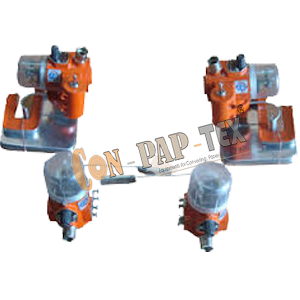
Stenter Feeler Switch for Selvedge Pinning
A stenter feeler switch is the selvedge sensor at the stenter entry that touches or senses the fabric edge and signals the guiding system, so the edge is brought onto the pins at the right position. Con-Pap-Tex supplies feeler switches for stenter machines, including the F-10 switch for Artos and S.M. stenters. A faulty feeler is one of the most common reasons the selvedge misses the pins.
What does a stenter feeler switch do?
A stenter feeler switch tells the machine where the fabric edge is. The fabric does not arrive at the pins perfectly straight: edges wander, curl and change with the fabric. A feeler at each side senses the edge just before the pinning point. When the edge moves out of its band, the feeler switches, and the guiding system or the chain width adjustment moves to bring the edge back.
The feeler is usually a light finger or paddle that rests against the edge and works a switch, in the same way as a limit switch on other machines. Its job is small, but the whole pinning result depends on it. If the feeler fails, the edge drifts and either misses the pins or goes on too deep.
Why does the feeler matter for pinning quality?
The feeler matters because the pins must enter the fabric a set distance in from the selvage. Too close to the edge and the pins tear out or miss. Too far in and the pins leave holes and marks in the usable width, and the edge outside the pins curls or flaps. The feeler keeps that distance steady along the length of the fabric.
When the feeler works well, every bar along the chain takes the selvedge at the same depth. When it fails, the pinning fault moves with the fabric, not with particular bars, and the pins are often blamed for it.
How does a faulty feeler switch show up?
A faulty feeler switch shows up as an edge that drifts on one side, or as a guider that hunts back and forth. The table lists the common signs.
| What you see | Likely feeler fault | First check |
| Selvedge misses the pins on one side | Feeler stuck, not switching | Move the feeler by hand and watch the guider respond |
| Pins enter too far into the fabric on one side | Feeler stuck in the other position, or set too far in | Feeler position and switching |
| Guider moves back and forth all the time | Feeler sticky, worn pivot, loose mounting | Pivot, spring and fixings |
| Edge position wanders with fabric speed | Slow switching, dirty contacts | Clean and test the switch |
| Fault only with curling or light fabric | Feeler pressure wrong for the fabric | Feeler setting and uncurling |
| Edge correct, but tears on the pins | Not a feeler fault | Pins, overfeed and width setting |
A fault that appears all along one side and follows the fabric is a feeding fault. A fault that repeats at the same point of each chain revolution is a bar or link fault. The stenter pin bar replacement page covers the bar faults.
How to test a stenter feeler switch
Test the feeler switch whenever the edge drifts, and as part of routine checks at planned stops.
- Watch the edge at the entry while running. Note which side drifts and whether the guider responds.
- Stop and isolate the machine before touching the feeler.
- Clean the feeler finger or paddle and the area around it. Lint and deposits make the feeler stick.
- Move the feeler by hand through its travel. It should move freely and return without sticking.
- With the machine safe for testing, check that the switch changes over at the same point each time and that the guider responds.
- Check the mounting, pivot and spring for wear or looseness.
- Compare the two sides. Both feelers should switch at the same position relative to the pin line.
- Run a trial piece and watch both selvedges go onto the pins.
Follow the stenter maker’s safety instructions when testing switches with the machine powered.
How do the feeler and the cloth guider work together?
The feeler senses the edge and the cloth guider moves it. Neither works without the other. A good feeler on a worn guider still lets the edge drift, and a good guider with a stuck feeler drives the edge the wrong way.
- If the feeler switches correctly but the edge does not move, check the stenter cloth guider.
- If the guider moves but the edge still tears on the pins, check the stenter overfeed and the pins.
- If the edge goes onto the pins but the pins are bent or blunt, renew them with pin plates as described on the stenter repinning page.
The complete range of stenter spares from the group is on the stenter spares page of the KEW Group main site.
Which feeler switches are supplied?
Con-Pap-Tex supplies feeler switches for stenter machines, including the F-10 switch for Artos and S.M. stenters. Switches are supplied to suit these stenter makes: Artos, Dhall, Harish, Harish Supra, Yamuna, Hi-Tech, S.M., Montex, Swastik, Bruckner, Babros, Ambika, Primatex, Krantz, Bharat Eng, Monforts, Wakayama, Famatex, Stenmech Lucy and James Farmer Norton.
These are the machine makers’ names. The switches are made to suit those machines and are not original parts of the machine makers. For a switch that is not listed, send the old switch or a clear photograph of it with any marking on its body.
When should a feeler switch be replaced?
Replace a feeler switch when it no longer switches cleanly at the same point after cleaning, when its pivot or finger is worn, or when its body or contacts are damaged by heat or moisture. A switch that has to be cleaned or adjusted every shift is worn out.
Keep a spare switch for each side of the machine. A feeler is a small part, but a failed one can stop the line or damage many metres of fabric edge before the cause is found. When the switch is replaced, test the new one on both sides before running production.
What to send for a feeler switch quotation
Send the following details:
- Stenter make and model
- The switch type, for example F-10, and any marking on the switch body
- Photographs of the switch and its mounting, with a ruler
- The old switch as a sample, if the type is not listed
- The number of switches needed
Send these details through the contact page. Pin bars and feeding parts for the same machine are listed on the stenter pin bar spare parts page.
Frequently Asked Questions
What does a selvedge feeler do on a stenter?
A selvedge feeler senses the position of the fabric edge just before the pins and signals the guiding system when the edge moves out of its band. The guider then brings the edge back, so the pins enter the fabric at a steady distance from the selvedge along the whole length of the fabric.
Which stenters use the F-10 feeler switch?
The F-10 feeler switch supplied by Con-Pap-Tex is for Artos and S.M. stenters. For other makes, feeler switches are supplied to suit the machine. Send the stenter make and model with a photograph of the existing switch and any marking on its body so the replacement can be matched.
Why does the guider keep moving back and forth?
A guider that moves back and forth all the time usually has a feeler that sticks, switches late or sits on a worn pivot or loose mounting. Clean the feeler, check that it moves freely and returns, and check its fixings. If the feeler is sound, look at the guider itself and its air or drive supply.
Can a bad feeler switch damage pin bars?
A bad feeler switch can lead to pin damage indirectly. When the edge drifts too far in or out, folded or doubled selvedges reach the pins, and the pinning brush presses them down hard. That bends pins. Correct the feeler fault first, then renew the bent pins in the affected section.
How often should stenter feeler switches be cleaned?
Stenter feeler switches should be cleaned at every planned stop, and more often on fabrics that shed lint or carry heavy finishes. Deposits around the feeler finger make it stick and switch late. A feeler that needs cleaning every shift to work properly is worn and should be replaced.
Should I keep a spare feeler switch in stock?
Keeping one spare feeler switch for each side of the stenter is good practice. The switch is small, but a failed feeler can stop production or damage a long run of fabric edge before the cause is found. A spare lets the switch be changed in minutes and tested before the line restarts.
Comments are closed.